

National Research Lab
TC + PG
Research at the National Research Lab advances on two interlocking axes. The Technical Cores (TCs) develop shared foundational technologies, from the robot’s body and intelligence to digital twins and human values, while the Project Groups (PGs) take on human-centered applications such as everyday assistance, wearable robots and intra-body robots. The PGs pose the problems to be solved, and the TCs provide the technologies that solve them.
Research architecture
3 Project Group × 4 Technical Core
Every Project Group collaborates with all four Technical Cores. The table illustrates the overall research architecture rather than a fixed assignment of individual projects.
| Project Group ↓ · Technical Core → | TC 1MORPHI Body | TC 2MOSAIC Intelligence | TC 3Digital Twin | TC 4Human Value |
|---|---|---|---|---|
| PG 1Life Companion | Body AdaptationShape & Stiffness | Context UnderstandingIntent & Action | Living EnvironmentsVirtual & Physical Validation | Safety & AcceptanceEveryday Trust |
| PG 2Wearable | Body InterfacesFit & Actuation | Personal AdaptationMovement & Assistance | Human–Robot ModelsDesign & Evaluation | Human-centered DesignSafety & Usability |
| PG 3Intra-Body | Soft StructuresAdaptation to Confined Spaces | Precision ControlState & Action Coordination | Biological Environment ModelsClinical Validation | Clinical TrustRisk & Ethics |
PGs frame human-centered application challenges. TCs provide shared foundational technologies, from hardware to intelligence, validation and value criteria.
Technical Core (TC)
TC 01 · MORPHI Body
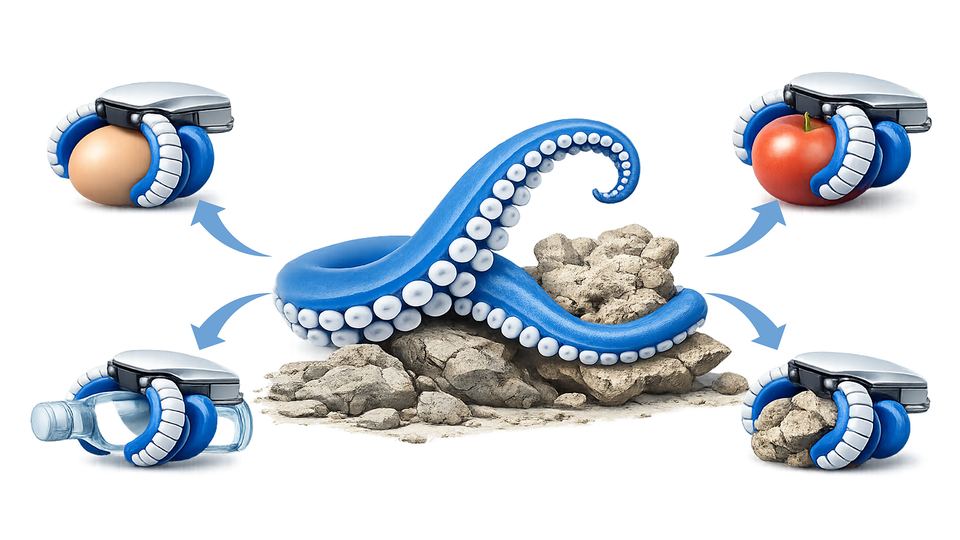
Adaptive robot materials, structures and physical intelligence
Why it matters
Robots that move in contact with people must respond safely to unpredictable changes. Handling every response through sensors and complex control algorithms increases computation and energy demand. This is why robots need materials and structures that themselves distribute forces and comply with their surroundings, going beyond the limits of a fixed body.
Research approach
MORPHI Body combines physical intelligence with variable structures that change shape and stiffness to suit the environment. Mechanisms are designed to find balance and distribute forces, allowing the body itself to perform part of the computation and control. We also study how robots sense their own physical state and respond to bodily changes, aiming for safe interaction and affordable, energy-efficient hardware.
Key research topics
- Reconfigurable actuation and structures: joints with actively adjustable shape and stiffness, and bio-inspired artificial muscles
- Self-sensing skin: soft distributed tactile sensors and systems for monitoring the robot’s physical state
- Modularity and reliability: shared specifications, plus durability and reliability testing, for low-cost, low-power hardware
Leader Cho, Kyu-JinDeputy Leader Han, Kyungwon19 faculty
Participating 14
- Kang, Ji HeongDept. of Chemistry
- Ko, Seung HwanDept. of Mechanical Engineering
- Kim, JinsooDept. of Electrical & Computer Engineering
- Kim, Ho-YoungDept. of Mechanical Engineering
- Park, Yong-laeDept. of Mechanical Engineering
- Sun, Jeong-YunDept. of Materials Science and Engineering
- Yang, JinkyuDept. of Mechanical Engineering
- Lee, HowonDept. of Mechanical Engineering
- Jung, GyuweonSchool of Transdisciplinary Innovations
- Cho, Kyu-JinDept. of Mechanical Engineering
- Ha, Jung-ikDept. of Electrical & Computer Engineering
- Han, KyungwonDept. of Mechanical Engineering
- Han, BohyungDept. of Electrical & Computer Engineering
- Hong, YongtaekDept. of Electrical & Computer Engineering
Affiliated 5
- Kim, TaeyongDept. of Mechanical Engineering
- Park, SeongjunSchool of Transdisciplinary Innovations
- Ahn, Sung-hoonDept. of Mechanical Engineering
- Yu, YoungjaeSchool of Transdisciplinary Innovations
- Yoon, Tae-youngDept. of Biological Sciences
TC 02 · MOSAIC Intelligence
Cooperative distributed intelligence and continual learning
Why it matters
Retraining an entire intelligence system whenever a robot’s body or task environment changes demands substantial time and computing resources. Real-world settings also require immediate responses to contact with people and changes in task conditions. Robots therefore need an architecture that can learn and reconfigure individual functions while coordinating overall behavior.
Research approach
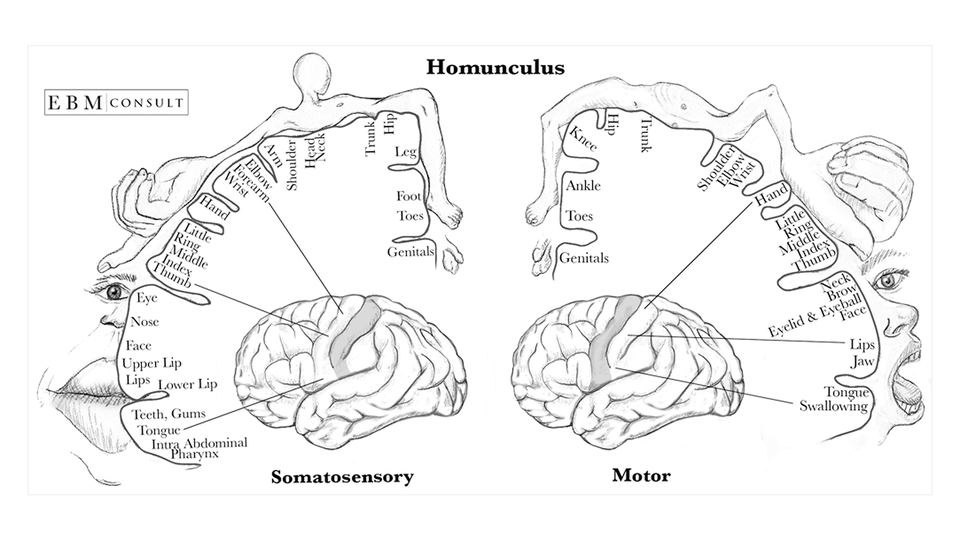
Inspired by functional specialization and coordination in the brain, MOSAIC Intelligence studies an architecture in which a higher-level global intelligence coordinates local intelligence for each body part and function. Local modules learn physical interactions and movement, while global intelligence interprets situations and goals and coordinates their cooperation. We study module recomposition and continual learning across both levels to enable efficient adaptation to different bodies and tasks.
Key research topics
- Autonomous local intelligence: modules that perceive the physical properties of robots, humans and environments and learn movement independently
- Contextual global intelligence: understanding and predicting situations to coordinate perception and movement modules
- Continual learning and co-evolution: local and global intelligence learning together and adapting to new environments and missions
Leader Kwak, NojunLeader Lee, Inah29 faculty
Participating 13
- Ko, Seung HwanDept. of Mechanical Engineering
- Kwak, NojunDept. of Intelligence & Information
- Kim, Young MinDept. of Electrical & Computer Engineering
- Kim, Ju HanCollege of Medicine
- Kim, JinsooDept. of Electrical & Computer Engineering
- Kim, TaesupGraduate School of Data Science
- Park, Frank C.Dept. of Mechanical Engineering
- Lee, Kyoung MuDept. of Electrical & Computer Engineering
- Lee, InahDept. of Brain & Cognitive Sciences
- Lee, JeheeDept. of Computer Science & Engineering
- Jung, GyuweonSchool of Transdisciplinary Innovations
- Ha, Jung-ikDept. of Electrical & Computer Engineering
- Han, BohyungDept. of Electrical & Computer Engineering
Affiliated 16
- Kim, AyoungDept. of Mechanical Engineering
- Kim, H. JinDept. of Aerospace Engineering
- Moon, TaesupDept. of Electrical & Computer Engineering
- Park, SeongjunSchool of Transdisciplinary Innovations
- Park, JaesikDept. of Computer Science & Engineering
- Park, HyeongjunDept. of Aerospace Engineering
- Park, Hae WonMIT Media Lab
- Suh, BongwonAI Institute
- Oh, SonghwaiDept. of Electrical & Computer Engineering
- Oh, JeanCMU RI
- Youn, Byeng D.Dept. of Mechanical Engineering
- Lee, KyoguDept. of Intelligence & Information
- Lee, DongjunDept. of Mechanical Engineering
- Lee, Jun KiAI Institute
- Lim, JongwooDept. of Mechanical Engineering
- Choi, JonghyunDept. of Electrical & Computer Engineering
TC 03 · Digital Twin
Robot–human–environment digital twin
Why it matters
Predicting contact between people and robots in changing environments requires multiple physical phenomena to be considered together. Existing digital twins can be fragmented by phenomenon, or face a trade-off between prediction accuracy and computing speed. Faster robot design, learning and validation require accurate, rapid simulation of complex interactions alongside consistent management of diverse data.
Research approach
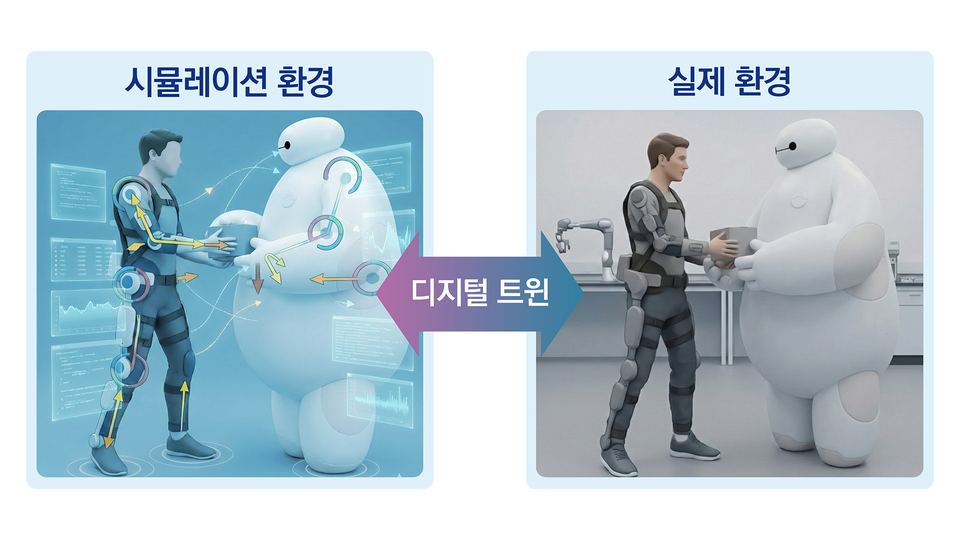
The Robot–Human–Environment Digital Twin connects multiphysics simulation, a data fabric and integrated software–hardware optimization. We study how to generate and augment physically consistent data in virtual experiments and connect it with real-world observations for iterative robot design and validation. The aim is an integrated framework that supports everyday assistance, wearable and intra-body robots under their different operating conditions.
Key research topics
- Digital twin: high-accuracy, high-speed simulation of complex physical interactions and generation of data for learning and validation
- Data fabric: generating, augmenting, storing and managing large-scale data in diverse formats while preserving physical consistency and context
- Infrastructure optimization: integrated software–hardware design for efficient simulation and data processing
Leader Kim, Do-NyunDeputy Leader Jung, Hyungsoo19 faculty
Participating 11
- Kim, Do-NyunDept. of Mechanical Engineering
- Kim, JinsooDept. of Electrical & Computer Engineering
- Park, Moon SeokCollege of Medicine (Bundang)
- Park, HyungminDept. of Mechanical Engineering
- Ahn, JooeunDept. of Physical Education
- Yang, JinkyuDept. of Mechanical Engineering
- Oh, Joo HwanDept. of Mechanical Engineering
- Won, JungdamDept. of Computer Science & Engineering
- Lee, Jae W.Dept. of Computer Science & Engineering
- Jung, HyungsooGraduate School of Data Science
- Han, BohyungDept. of Electrical & Computer Engineering
Affiliated 8
- Kang, Yeon JuneDept. of Mechanical Engineering
- Kim, AyoungDept. of Mechanical Engineering
- Ahn, Changbum R.Dept. of Civil & Environmental Engineering
- Yu, YoungjaeSchool of Transdisciplinary Innovations
- Youn, Byeng D.Dept. of Mechanical Engineering
- Lee, DongjunDept. of Mechanical Engineering
- Lee, Chang-gunDept. of Computer Science & Engineering
- Joo, HanbyulDept. of Computer Science & Engineering
TC 04 · Human Value
Robot safety, clinical reliability and social acceptance
Why it matters
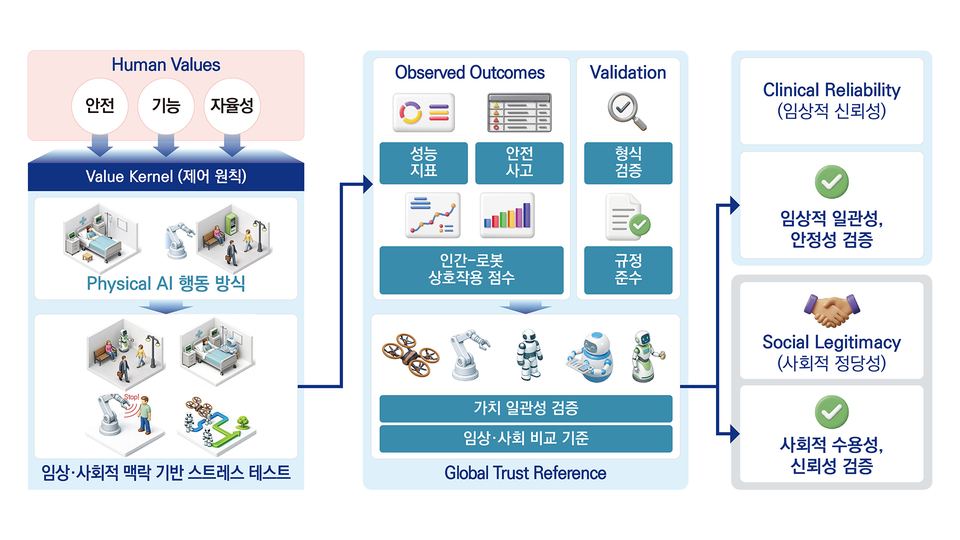
Higher performance alone does not make a robot beneficial or trustworthy. Robots that directly affect people’s bodies and daily lives must account for human values, including safety, functioning and autonomy. Rather than only evaluating ethics or usability after development is complete, a framework is needed that reflects and verifies these values from initial design through control and real-world validation.
Research approach
Human Value studies a Value Operating System (Value OS) that translates human-centered values into design decisions and control principles that can be verified throughout development. Scenarios reflecting clinical and social contexts are used to examine robot behavior and risks to human values, with findings fed back into subsequent designs. The aim is to lay a foundation for comparing and judging robots’ clinical reliability and social acceptance against consistent criteria.
Key research topics
- Value-based design: defining indicators for safety, functioning and autonomy and using them in design and validation
- Real-world validation and stress testing: identifying thresholds of value compromise across interaction scenarios and explaining the basis for each judgment
- Shared criteria and design feedback: studying a Human Value API and reliability criteria, and feeding evaluation results into control and design improvements
Leader Kim, HongsooDeputy Leader Park, Hyunwoo19 faculty
Participating 12
- Kim, KeewonCollege of Medicine
- Kim, Young MinDept. of Electrical & Computer Engineering
- Kim, HyeoneuiCollege of Nursing
- Kim, HongsooGraduate School of Public Health
- Park, JuyeonDept. of Textiles, Merchandising & Fashion Design
- Park, HyunwooGraduate School of Data Science
- Baek, Sung HeeDept. of Biological Sciences
- Seo, JongmoDept. of Electrical & Computer Engineering
- Yoon, Chang HwanCollege of Medicine (Bundang)
- Lee, JoonhwanDept. of Communication
- Jeong, Chang WookCollege of Medicine
- Jo, YohanGraduate School of Data Science
Affiliated 7
- Ro, Du HyunCollege of Medicine
- Mook-Jung, InheeCollege of Medicine
- Park, MyungwooCollege of Medicine (Boramae)
- Park, SangchulSchool of Law
- Beom, JaewonCollege of Medicine (Bundang)
- Ahn, Woo-youngDept. of Psychology
- Lee, Soo-hyunDept. of Psychology
Project Groups (PG)
PG 01 · Life Companion
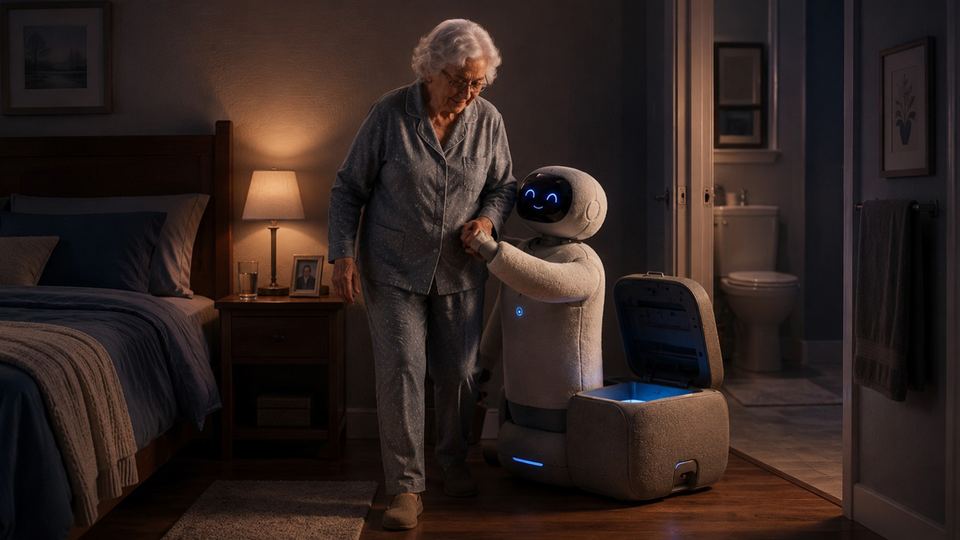
Robots for everyday assistance
We study robots that understand human intentions and environmental changes, and share everyday tasks in open, unstructured settings such as homes and living spaces.
- Adaptive bodies and movement that respond to changes in people and spaces
- Intelligence and interaction informed by context and user needs
- Methods for iterative learning and validation in real living environments
Leader Lee, JoonhwanDeputy Leader Cho, Kyu-Jin23 faculty
Participating 10
- Kim, Young MinDept. of Electrical & Computer Engineering
- Kim, Ho-YoungDept. of Mechanical Engineering
- Kim, HongsooGraduate School of Public Health
- Park, JuyeonDept. of Textiles, Merchandising & Fashion Design
- Park, HyunwooGraduate School of Data Science
- Lee, JoonhwanDept. of Communication
- Jung, GyuweonSchool of Transdisciplinary Innovations
- Cho, Kyu-JinDept. of Mechanical Engineering
- Jo, YohanGraduate School of Data Science
- Han, KyungwonDept. of Mechanical Engineering
Affiliated 13
- Kim, AyoungDept. of Mechanical Engineering
- Mook-Jung, InheeCollege of Medicine
- Park, JaesikDept. of Computer Science & Engineering
- Beom, JaewonCollege of Medicine (Bundang)
- Suh, BongwonAI Institute
- Ahn, Changbum R.Dept. of Civil & Environmental Engineering
- Yu, YoungjaeSchool of Transdisciplinary Innovations
- Lee, KyoguDept. of Intelligence & Information
- Lee, DongjunDept. of Mechanical Engineering
- Lee, Soo-hyunDept. of Psychology
- Lee, Chang-gunDept. of Computer Science & Engineering
- Lim, JongwooDept. of Mechanical Engineering
- Joo, HanbyulDept. of Computer Science & Engineering
PG 02 · Wearable
Wearable robots for movement assistance and augmentation
Robots worn directly on the body support movement, strength and balance, providing a natural experience tailored to each person’s physical characteristics.
- Assistive technologies that respond to body movement and user intent
- Personalized designs that balance comfort and actuation performance
- Design and evaluation informed by human–robot interaction data

Leader Ahn, JooeunDeputy Leader Kim, Jinsoo21 faculty
Participating 16
- Ko, Seung HwanDept. of Mechanical Engineering
- Kim, KeewonCollege of Medicine
- Kim, JinsooDept. of Electrical & Computer Engineering
- Kim, HyeoneuiCollege of Nursing
- Kim, HongsooGraduate School of Public Health
- Park, Moon SeokCollege of Medicine (Bundang)
- Park, Yong-laeDept. of Mechanical Engineering
- Park, JuyeonDept. of Textiles, Merchandising & Fashion Design
- Seo, JongmoDept. of Electrical & Computer Engineering
- Ahn, JooeunDept. of Physical Education
- Won, JungdamDept. of Computer Science & Engineering
- Lee, JeheeDept. of Computer Science & Engineering
- Jung, GyuweonSchool of Transdisciplinary Innovations
- Han, KyungwonDept. of Mechanical Engineering
- Han, BohyungDept. of Electrical & Computer Engineering
- Hong, YongtaekDept. of Electrical & Computer Engineering
Affiliated 5
- Park, MyungwooCollege of Medicine (Boramae)
- Park, SeongjunSchool of Transdisciplinary Innovations
- Beom, JaewonCollege of Medicine (Bundang)
- Yu, YoungjaeSchool of Transdisciplinary Innovations
- Choi, JonghyunDept. of Electrical & Computer Engineering
PG 03 · Intra-Body
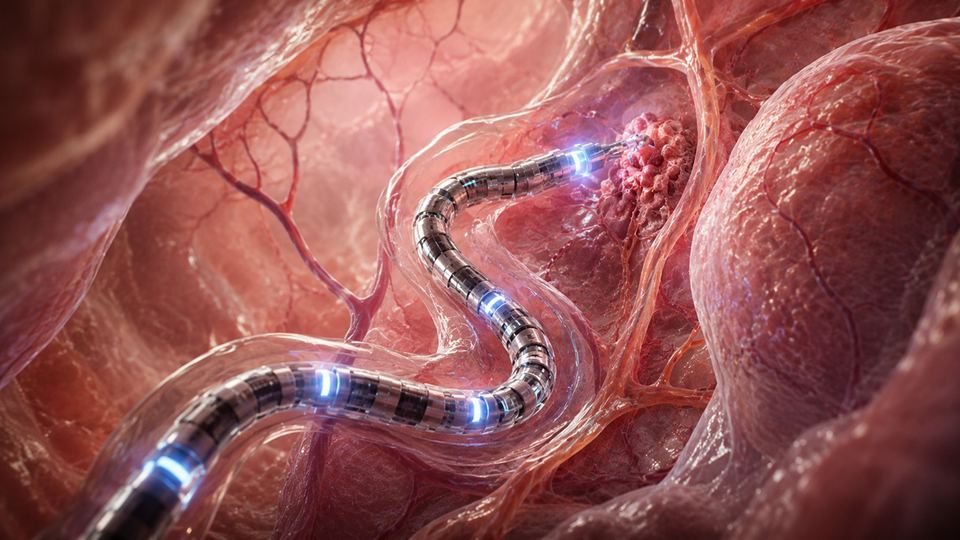
Robots operating inside the human body
We develop robots and interfaces that operate in harmony with surrounding tissue in confined, sensitive internal environments, and build validation frameworks connected to clinical practice.
- Soft, adaptive structures for confined and complex environments
- Precise motion that accounts for interactions between robots and biological environments
- Demonstration and evaluation methods grounded in safety and clinical reliability
Leader Kim, Ho-YoungDeputy Leader Ro, Du Hyun19 faculty
Participating 14
- Kang, Ji HeongDept. of Chemistry
- Ko, Seung HwanDept. of Mechanical Engineering
- Kwak, NojunDept. of Intelligence & Information
- Kim, Do-NyunDept. of Mechanical Engineering
- Kim, Ho-YoungDept. of Mechanical Engineering
- Park, HyungminDept. of Mechanical Engineering
- Baek, Sung HeeDept. of Biological Sciences
- Seo, JongmoDept. of Electrical & Computer Engineering
- Yoon, Chang HwanCollege of Medicine (Bundang)
- Lee, HowonDept. of Mechanical Engineering
- Jeong, Chang WookCollege of Medicine
- Ha, Jung-ikDept. of Electrical & Computer Engineering
- Han, KyungwonDept. of Mechanical Engineering
- Hong, YongtaekDept. of Electrical & Computer Engineering
Affiliated 5
- Kang, Seung-kyunDept. of Materials Science and Engineering
- Ro, Du HyunCollege of Medicine
- Park, SeongjunSchool of Transdisciplinary Innovations
- Lee, Jun KiAI Institute
- Jeon, Noo LiDept. of Mechanical Engineering